




When Vendor Compromise Becomes Financial Risk
Behavioral AI built to detect and stop vendor compromise before attackers can exploit trusted relationships.









You're Only As Secure As Your Weakest Vendor
As organizations rely on growing networks of vendors and third parties to keep business moving, attackers are increasingly targeting those trusted relationships.
Many vendors don’t have the same security resources as the enterprises they support, making them attractive entry points for attackers. Once inside those trusted vendor accounts, attackers can manipulate invoices, redirect payments, or insert themselves into legitimate financial conversations without raising suspicion.
As a result, some of the biggest payment fraud risks now come from the vendors organizations trust most.
Why Controls Clear Compromised Vendors


How To Protect Trusted Vendor Relationships

Analyze Intent, Not Indicators

Detect Malicious Activity

Connect Risk Signals
How Trustmi Detects & Eliminates VEC Before Money Moves
Behavioral AI for Vendor Trust

The Trust Network

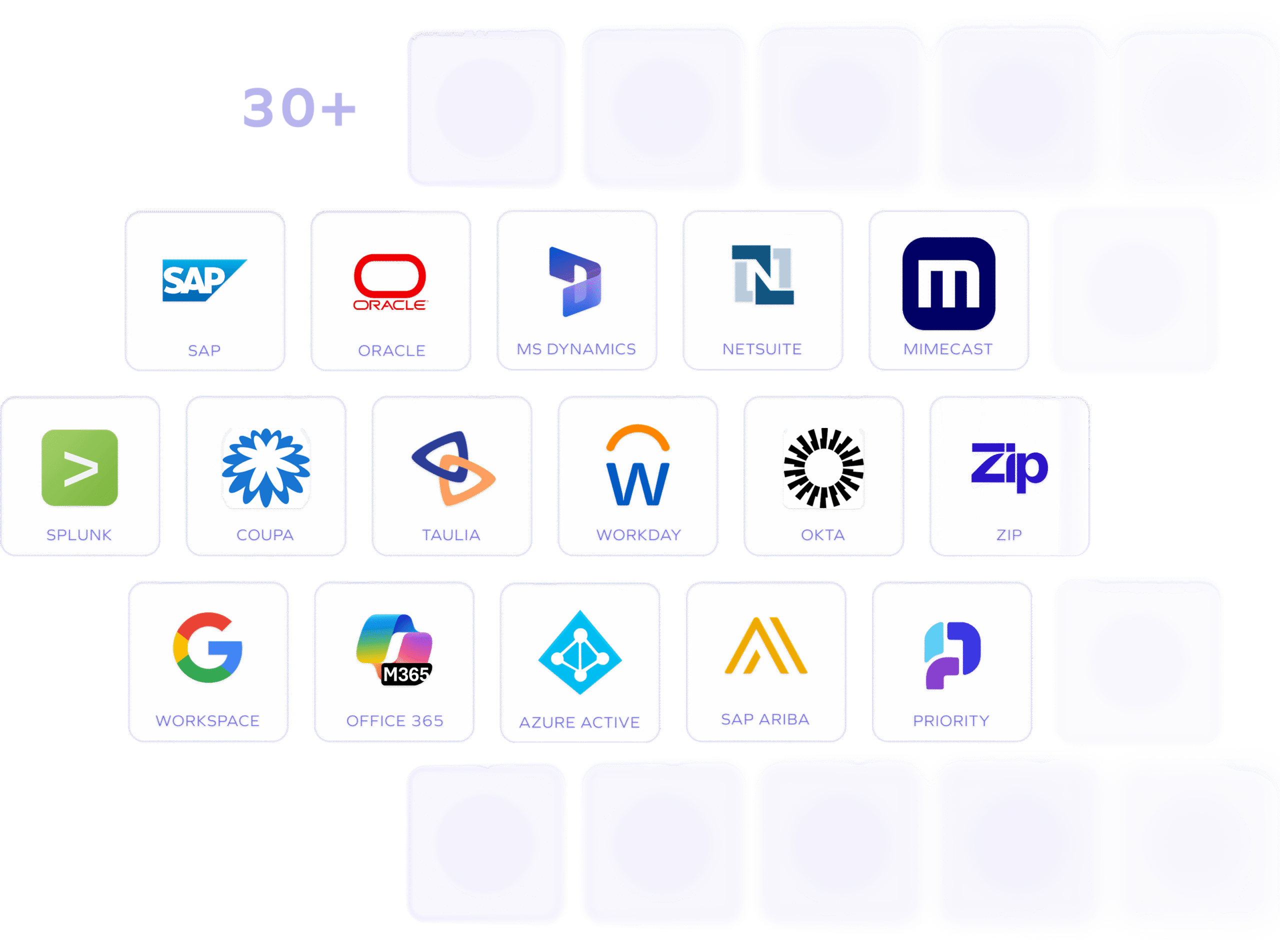
Vendor Workflow Integrations
Proven Across the Trustmi Platform
$1B+ Fraud Prevented
Prevention, not reimbursement.
$240B+ Protected
Trusted at enterprise volume.
90% Less Manual Review
Fewer alerts, faster approvals.
"We've had specific vendors in our ecosystem potentially compromised and without a tool like Trustmi, it was fundamentally unclear whether or not this was the case."

Additional Resources

FAQs
Vendor Email Compromise (VEC) is when an attacker takes over a trusted vendor’s email account and operates from the inside. It can be used to steal data or spread to others, but its most costly use is payment fraud: fake invoices, altered banking details, and payment requests that ride in on a partner your systems already trust.
Security teams often use the term Vendor Email Compromise (VEC) to describe attacks where a vendor’s email account is taken over and used to facilitate fraud. Finance teams may refer to the same issue as vendor compromise, vendor fraud, or payment fraud because the business impact is ultimately financial.
While the terminology varies, the risk is the same: attackers exploit trusted vendor relationships to manipulate communications, redirect payments, and steal money.
The challenge isn’t what teams call it, it’s stopping compromised vendors from turning trust into financial loss.
Trustmi protects businesses from Vendor Email Compromise by verifying the payment, not just the sender. Because a compromised vendor account is genuinely legitimate, confirming who sent a request was never the same as confirming the request itself. Trustmi protects the entire B2B payment lifecycle, using behavioral AI and real-time data correlation across financial systems to verify that a request actually fits the vendor and the payment before money moves, so a fraudulent request can’t ride in on a trusted account.
VEC is often grouped under the broader category of Business Email Compromise (BEC), but the attacks work differently. Traditional BEC typically relies on impersonation or spoofed emails, while VEC involves a legitimate vendor account that has already been compromised. Because the communication comes from a trusted account, many of the controls organizations use to stop BEC may never be triggered. This means defending against VEC requires a different approach, one focused on vendor behavior, payment workflows, and financial risk.
Traditional email security tools fail to detect VEC because these attacks rarely contain malware or malicious links. Attackers rely entirely on highly targeted, text-based social engineering tactics and use authentic, compromised email accounts, which leaves no obvious technical red flags. Trustmi research found that 85% of payment fraud attacks begin in email, and they bypass email security, because the message comes from a legitimate vendor account and references real business activity. The email may be authentic—the payment request is not.
Bank account validation doesn’t prevent vendor fraud because it only answers one question: “Is this a real bank account?” — not the more important one, “Should I send money there?” Trustmi research found that 90% of fraudulent bank accounts used in payment fraud were approved by their banks. In vendor compromise attacks, fraudsters use legitimate accounts and trusted vendor relationships to redirect payments, so the fraudulent request passes this traditional validation check.
Trustmi detects payment fraud from compromised vendors by using Behavioral AI to identify risk across vendor, invoice, payment, and communication workflows. Instead of relying on a single indicator, Trustmi analyzes hundreds of behavioral signals to understand what is normal for a vendor relationship and detect when something changes. By connecting risk signals across email, ERP, AP, banking, and payment systems, Trustmi helps organizations identify compromised vendors and stop fraudulent payments before they’re sent.
Trusted by Finance and Security Leaders





“Trustmi provided transparency into our payment process to see where cyberattacks and errors were happening and full protection without changing our workflow."

“Like many businesses today, we’ve experienced cyber attacks on our payment process, but we didn’t realize the extent to which we were at risk until we evaluated Trustmi. Now we’re confident we’ll be able to avoid future attacks with their platform.”

“Trustmi’s platform is an important tool for our team. Their Payment Flows module increases our payment cycle security, and our team has also managed to cut down the time for preparing payments reports from half a day to half an hour.”

“Trustmi provided transparency into our payment process to see where cyberattacks and errors were happening and full protection without changing our workflow."
“Like many businesses today, we’ve experienced cyber attacks on our payment process, but we didn’t realize the extent to which we were at risk until we evaluated Trustmi. Now we’re confident we’ll be able to avoid future attacks with their platform.”
“Trustmi’s platform is an important tool for our team. Their Payment Flows module increases our payment cycle security, and our team has also managed to cut down the time for preparing payments reports from half a day to half an hour.”
$240 Billion Secured
Protecting businesses globally against socially engineered fraud and errors.
Up to 2.5% of Budget Saved
By Eliminating Fraud and Payment Errors
From Hours to Seconds
Manual Process Time Reduced
 Behavioral AI-powered security
  Protection on day one
  10-15x ROI