




Payment Security that Stops Fraud
Behavioral AI extends payment fraud detection from the first email to the final payment, catching the fraud that slips past both email security and finance controls.








One Payment Process, Fragmented Across Teams
Security owns the inbox. Finance owns the payment run. But socially engineered fraud gets through both, impersonating vendors, manipulating invoices, and changing bank details as it moves from email to ERP to payment.
No single team sees the whole path, and it shows: more than 8 in 10 organizations were targeted last year, nearly half took a direct financial loss, and among those, over half lost more than $500K in a single incident.
See It In Action
Follow a payment through Trustmi to see how fraud is detected, investigated, and stopped before money moves.
One Shared View for Every Payment
Behavioral AI Across Email and Payments

Real-Time Cross-System Correlation
Trustmi integrates with the tools both teams already use: SAP, Oracle, Acumatica, Microsoft 365, and Google Workspace.

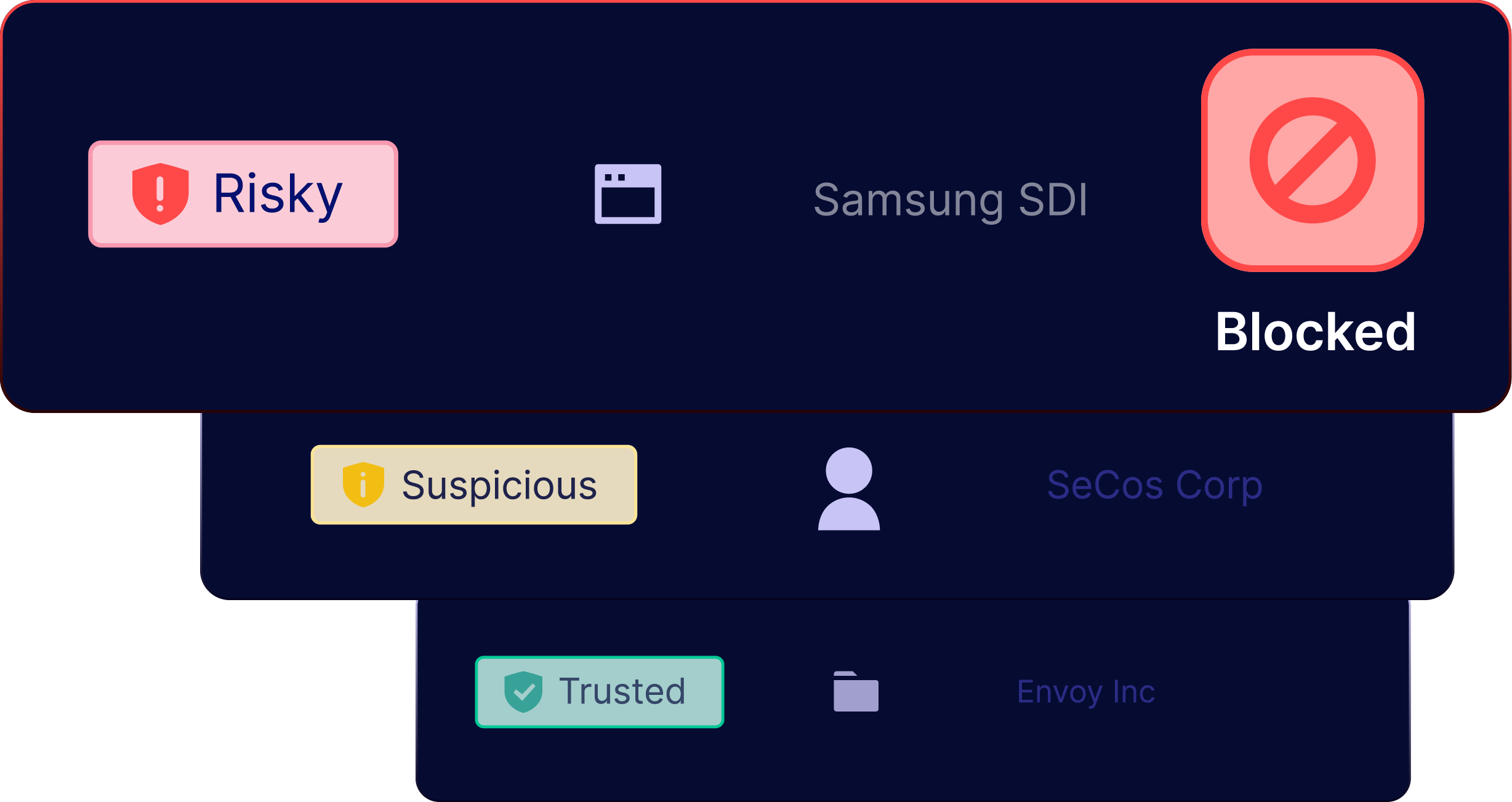
Safe/Unsafe Verdict at the Final Step

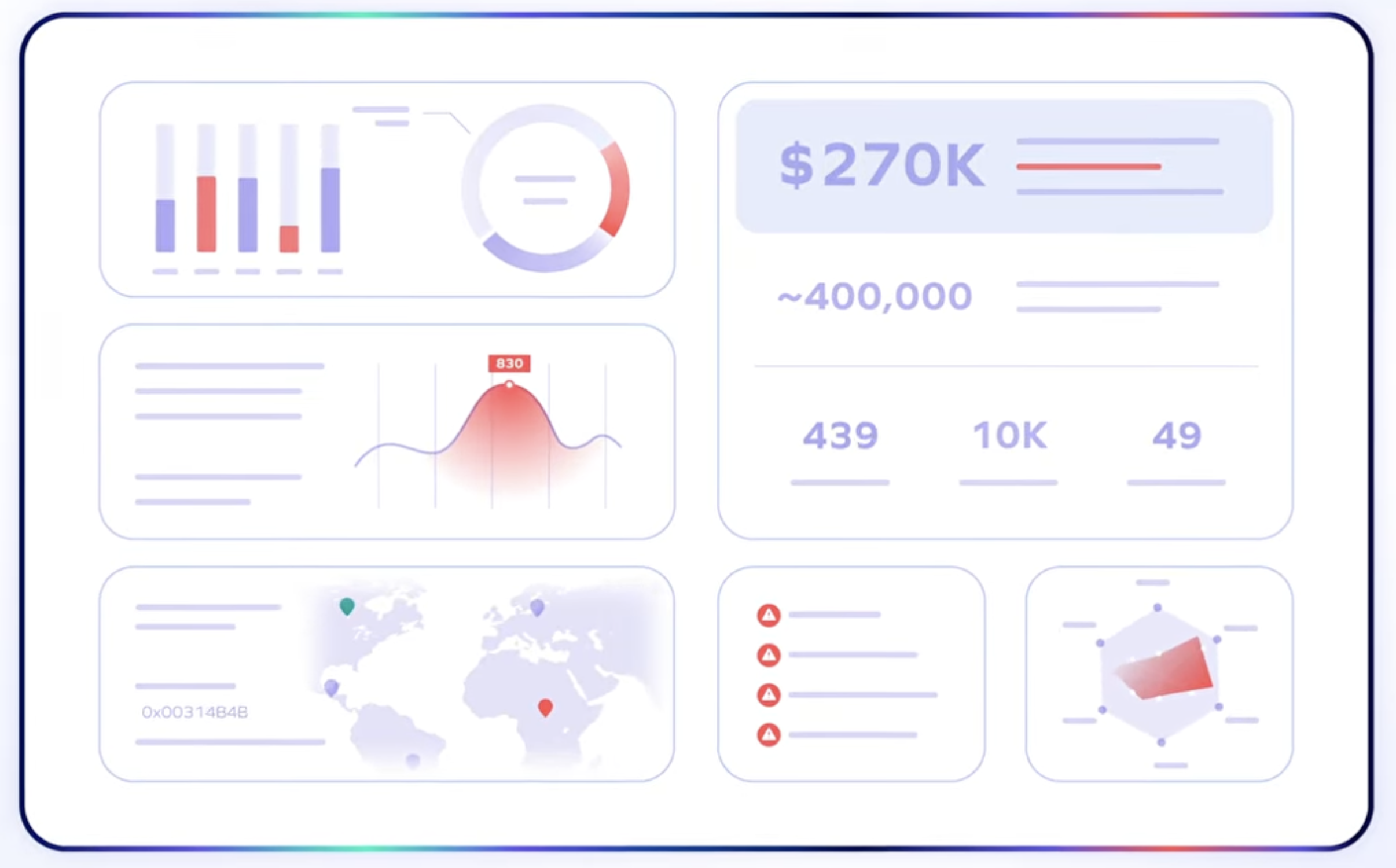
Unified Dashboard for Both Teams

Meet the AI Investigation Agent
The AI Investigation Agent turns a slow, siloed social engineering fraud investigation into a live one. It gathers evidence, builds the timeline, and brings Finance and Security in to ask questions and contribute in real time, so both teams reach an evidence-backed answer together, faster.
Payment Security that Pays Off
$1M+ Fraud Prevented
One customer stopped $1M in a year, $500K of it in the first week.
Zero Losses
No customer has lost a dollar to fraud on the platform.
90% Less Manual Review
Fewer alerts, faster approvals, and far less work for your team.
"CFOs think they're safe in their accounting system. That's a false illusion."

Ready for Nacha’s 2026


FAQs
Payment security is everything that protects your company’s outgoing payments from fraud, from the technology and controls to the everyday checks that stop a bad payment before it goes out. It’s a discipline that belongs to two teams at once: Security, which protects the email and systems where an attack begins, and Finance, which owns the invoices and payments where it ends. That’s what makes payment security its own category, it covers the full path a payment travels, from the first email with a vendor to the moment money leaves your account.
Traditional security tools and ERPs miss payment fraud because they check the wrong things. Email filters look for bad domains and malware, and ERPs match invoices against static rules. But modern payment fraud doesn’t break those rules, it works within them. When an attacker uses a compromised vendor account and an approved bank account, the request looks completely legitimate, so it moves through your approved workflow without tripping a single alarm.
Behavioral AI is different because it learns how your vendors and teams normally behave, instead of just scanning for known threats. Regular monitoring looks for red flags it’s been told to watch for: malware, blocklisted domains, exact-match rules. Behavioral AI watches for what’s off: a vendor emailing at an odd hour, a subtle change in tone, a bank-routing update that doesn’t fit their history. Any one of those might look fine on its own, which is exactly why it slips past traditional tools, and exactly what Behavioral AI is built to catch before money moves.
Trustmi helps you meet Nacha’s 2026 ACH rules by automating the fraud monitoring, account validation, and pre-payment checks the new regulations require. Instead of asking your accounts payable team to run those controls by hand, Trustmi runs them across your email and banking data automatically, and keeps an auditable record of every check. So when your bank asks you to show the controls Nacha now requires, you can.
Bank account validation isn’t enough to stop payment fraud: it confirms that an account is real and active, but it can’t tell you who actually controls it. In social engineering fraud, attackers route money to legitimate, bank-approved accounts they’ve opened. The account passes validation cleanly while the money still ends up with a criminal. To catch that, you have to look past the account to the request itself, whether it matches the vendor’s history, their invoices, and how they normally communicate.
Trustmi follows a payment across every stage where fraud can enter, and connects what Security and Finance each see separately. Say a vendor emails a new invoice with updated bank details. Trustmi checks whether the email really came from the vendor or a lookalike domain, whether the invoice metadata shows signs of tampering, whether the new bank account fits the vendor’s history, and whether the timing matches how they normally bill. On its own, Security would only see the email and Finance would only see the invoice. Trustmi sees all of it at once, so the pieces that look fine alone but suspicious together get caught before the payment goes out.
Trusted by Finance and Security Leaders






“Trustmi provided transparency into our payment process to see where cyberattacks and errors were happening and full protection without changing our workflow."

“Like many businesses today, we’ve experienced cyber attacks on our payment process, but we didn’t realize the extent to which we were at risk until we evaluated Trustmi. Now we’re confident we’ll be able to avoid future attacks with their platform.”

“Trustmi’s platform is an important tool for our team. Their Payment Flows module increases our payment cycle security, and our team has also managed to cut down the time for preparing payments reports from half a day to half an hour.”

“Trustmi provided transparency into our payment process to see where cyberattacks and errors were happening and full protection without changing our workflow."
“Like many businesses today, we’ve experienced cyber attacks on our payment process, but we didn’t realize the extent to which we were at risk until we evaluated Trustmi. Now we’re confident we’ll be able to avoid future attacks with their platform.”
“Trustmi’s platform is an important tool for our team. Their Payment Flows module increases our payment cycle security, and our team has also managed to cut down the time for preparing payments reports from half a day to half an hour.”
$240 Billion Secured
Protecting businesses globally against socially engineered fraud and errors.
Up to 2.5% of Budget Saved
By Eliminating Fraud and Payment Errors
From Hours to Seconds
Manual Process Time Reduced
 Behavioral AI-powered security
  Protection on day one
  10-15x ROI