




Every AP leader knows the pattern: payment volume grows, the queue grows, and eventually the only honest answer to “can we handle this?” is a request for another person.
The request is rarely unreasonable. Someone has to verify vendors, review payment runs, and work the exceptions. But adding people addresses capacity, not necessarily the manual work creating the bottleneck.
The challenge is whether adding people can keep up as payment operations become more complex. AI offers a different way forward: handling more payments, vendors, and exceptions without requiring headcount and operating costs to grow at the same rate, or increasing exposure to fraud and costly errors.

Why Scaling Payment Operations Takes More Than Headcount
Traditional AP operations scale by adding capacity. More invoices require more processing, more exceptions require more investigation, and more payment runs require more review. Automation has helped reduce that burden through invoice capture, coding, and approval routing, but the transition is far from complete.
According to IOFM’s AP Benchmarking Report, 57% of AP processes remain primarily manual. Even in organizations that have automated invoice processing, verification, exception handling, and payment investigations can still demand substantial human attention.
As enterprises grow, that work becomes more complicated. Acquisitions introduce additional ERPs and vendor records. Payment approvals involve multiple departments. Fraudsters exploit familiar business processes with requests that look increasingly legitimate. Trustmi analyzed targeted payment fraud attempts in the first half of 2026, roughly five times the number recorded during the same period in 2025.
The problem isn’t simply that AP teams have more transactions to process. Each additional vendor, entity, or system introduces more information to verify and more opportunities for something to go wrong. Hiring another reviewer may help clear the queue. But more capacity to perform the same checks doesn’t necessarily mean better control over the payment process.
Why More Manual Review Isn’t the Answer
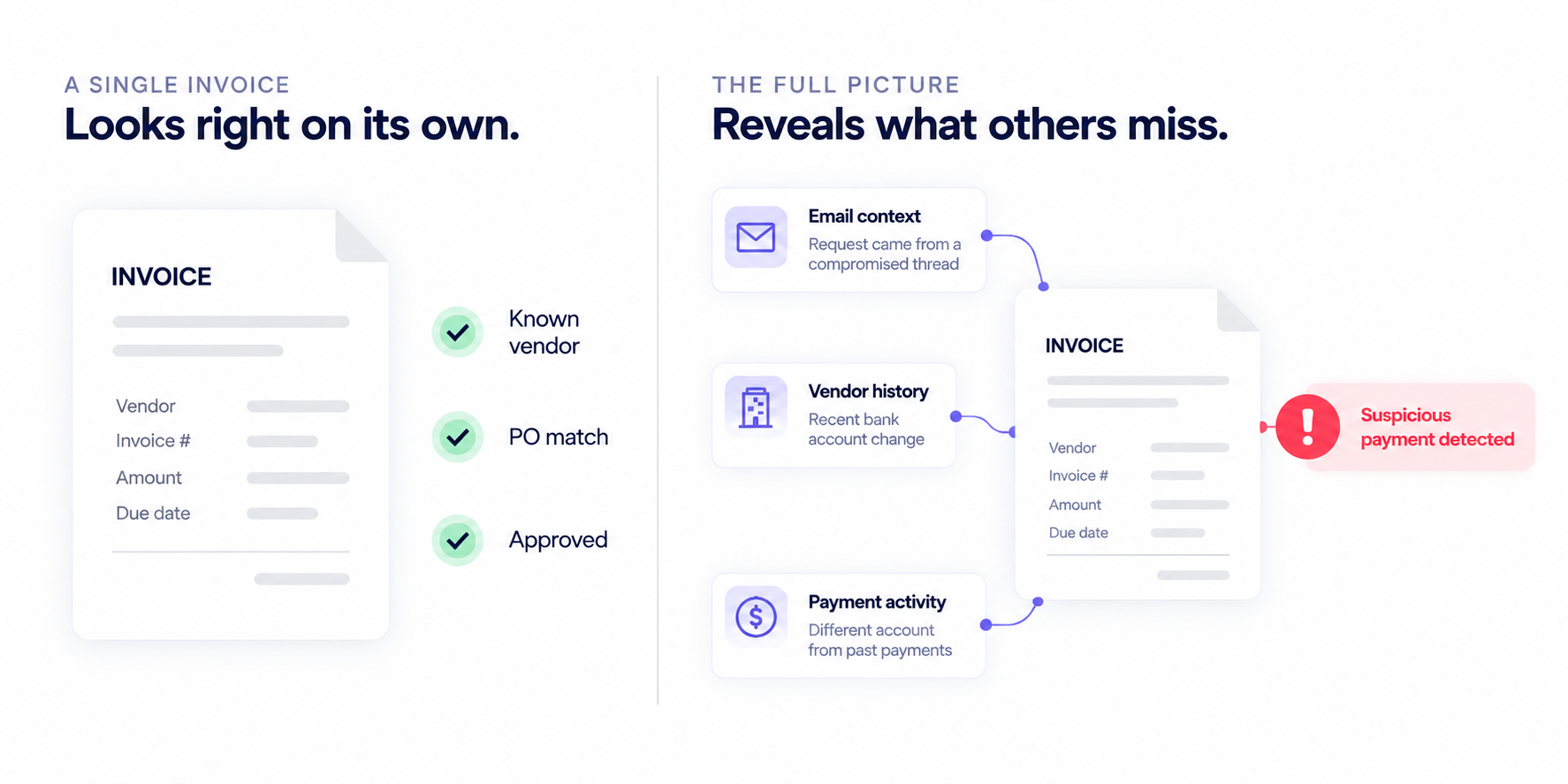
Consider an enterprise that received a fraudulent invoice from a real vendor. The request appeared legitimate at every step:
- Vendor record: An established vendor the business already paid.
- Invoice matching: The invoice matched an existing purchase order.
- Approval: The managing director’s legitimate email address appeared in the approval thread.
Even the discrepancies that were visible didn’t provide a reliable answer. A reply-to mismatch had already been detected but scored as low risk in isolation, while verifying the vendor’s headquarters address produced a legitimate confirmation that did nothing to establish whether the payment itself was safe.
Trustmi identified the fraud by connecting discrepancies across the invoice’s billing patterns, file metadata, and underlying email records, stopping the payment before release. The problem wasn’t that a reviewer had failed to check carefully enough. It was that the decisive evidence wasn’t available through the existing review process.
How AI Changes the Economics of Payment Operations
The real opportunity isn’t simply to make employees faster. It’s to reduce the amount of manual work required to manage each additional payment.
Most payment automation has focused on individual tasks: capturing invoice data, routing approvals, or moving transactions through a workflow. Those improvements matter, but they don’t eliminate the work that happens when something needs to be verified, investigated, or reconciled. Someone still has to gather information, determine whether an exception is legitimate, and coordinate with other teams.
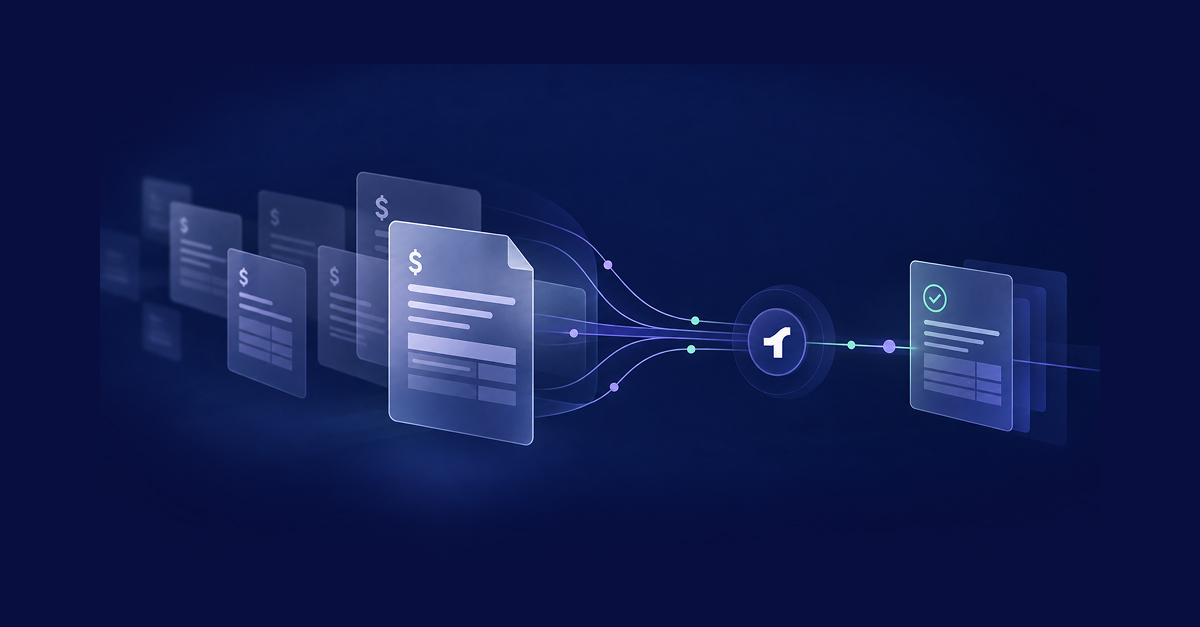
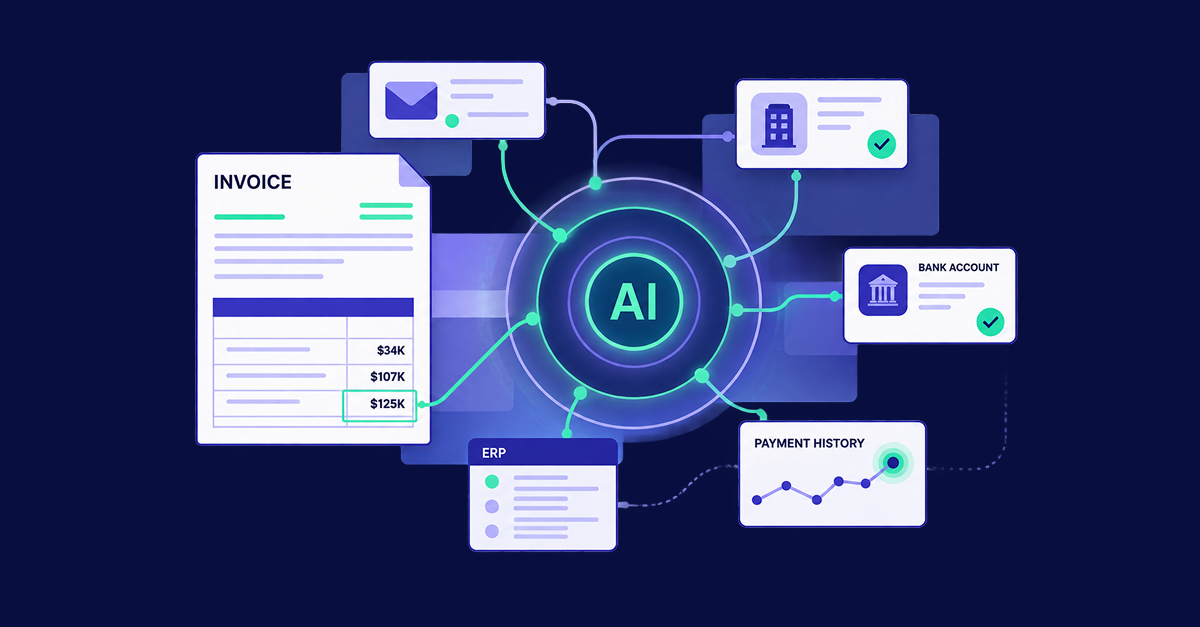
The right application of AI changes that division of labor. End-to-end Behavioral AI evaluates activity throughout the payment process, connecting information from the systems and teams involved. AI agents can then take on the work surrounding a flagged transaction: gathering supporting records, examining inconsistencies, and assembling findings for the people responsible for the decision.
As payment volume grows, AP teams can review investigations with the relevant evidence already assembled rather than manually reconstructing every suspicious request. They can focus on exceptions that genuinely require attention instead of repeatedly checking information across disconnected systems. And finance and security can work from a shared view of the payment rather than exchanging information to establish what happened.
The goal isn’t to remove people from important decisions. It’s to remove the routine work that consumes their capacity before they can make those decisions. At the same time, connecting information across the payment process helps uncover fraud and errors that isolated checks can miss. That’s how AI can help organizations handle more payments, vendors, and entities without requiring a proportional increase in manual reviews or accepting greater payment risk.
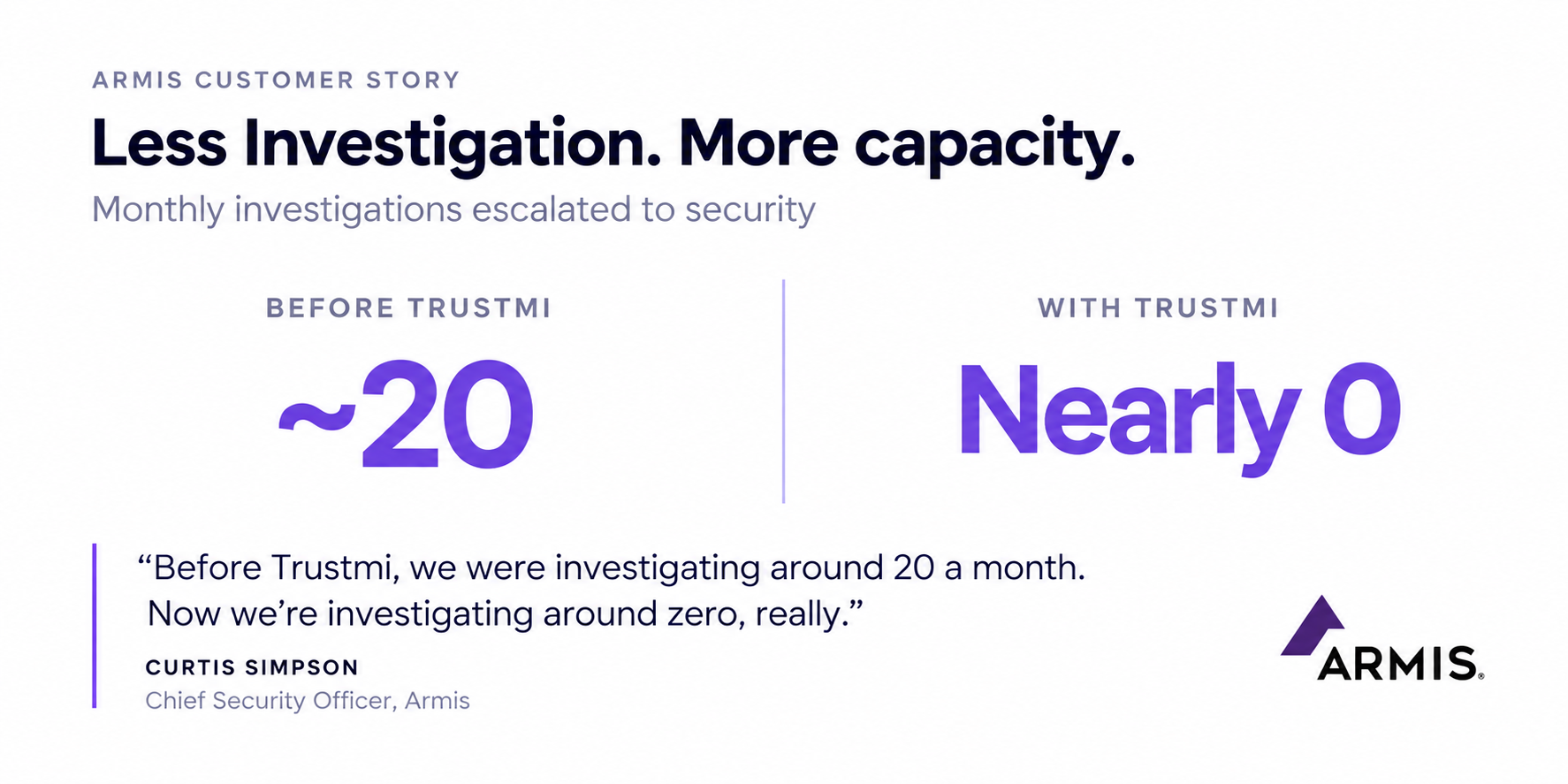
Armis Went From 20 Monthly Investigations to Nearly Zero
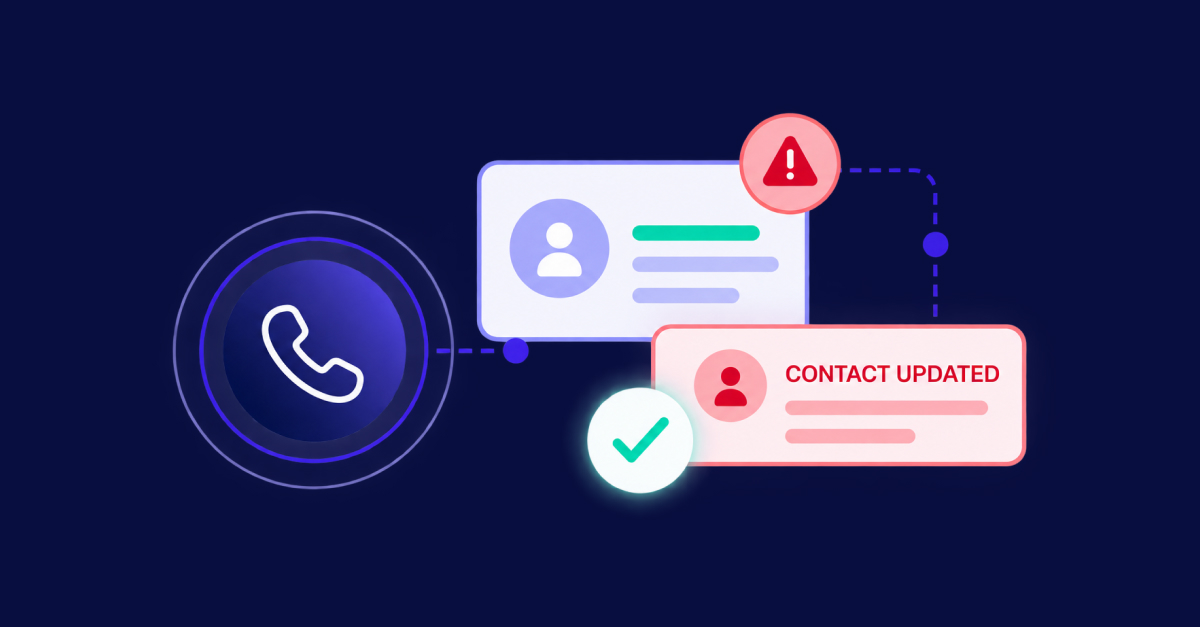
Armis offers a concrete example of what this shift can look like. Before implementing Trustmi, suspicious payment-related communications were regularly escalated to its security team for investigation. After Trustmi was introduced, those escalations dropped dramatically.
Trustmi helped the finance team distinguish fraudulent activity from legitimate requests, reducing the need for security escalations and the back-and-forth between teams. The result wasn’t fewer employees. It was less investigative work consuming their capacity, allowing the organization to scale without sacrificing payment security.
A Different Way to Scale Payment Operations
Adding people will always have a place in growing finance organizations. But when every increase in payment volume creates more manual checks, investigations, and handoffs, hiring cannot remain the only answer.
The opportunity isn’t simply to process more payments with the same team. It’s to reduce the work each additional payment creates, while improving the ability to catch fraud and errors. That’s what makes AI a different way to scale.
For a closer look at where AI delivers value in accounts payable, and how to measure the return, explore our guide with IOFM.

 Behavioral AI-powered security
  Protection on day one
  10-15x ROI